
 $ AUD
$ AUD
Blog
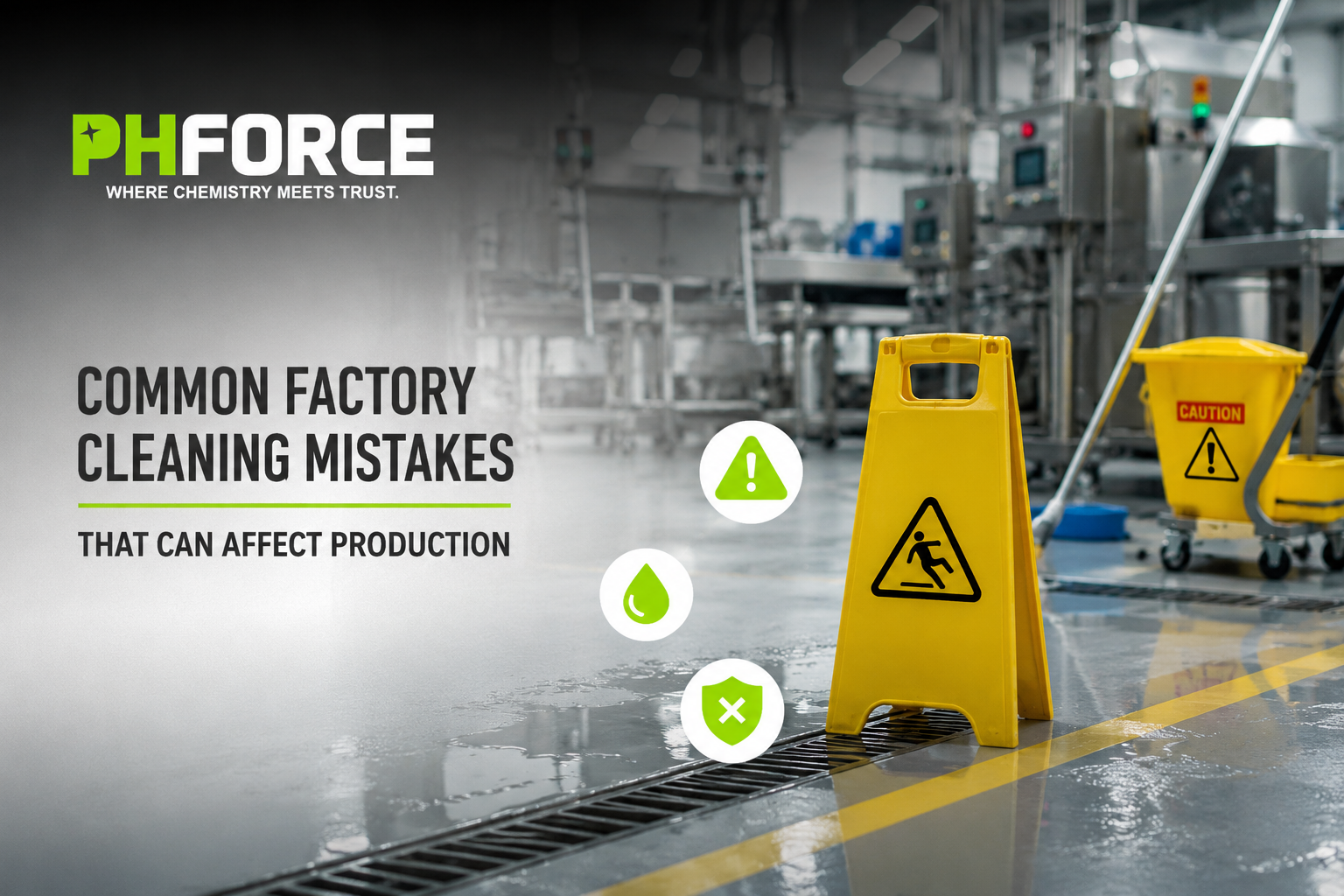
Common Factory Cleaning Mistakes That Can Affect Production
Factory cleaning mistakes can damage equipment, create safety risks, and stop production without warning. Five common errors include pressure washing sensitive controls, using unsuitable degreasers, ignoring combustible dust, rushing dwell times, and mixing chemicals.
These mistakes can cause machinery repairs, damaged flooring, contamination, failed inspections, and costly production delays. Strong industrial hygiene practices reduce these risks while protecting equipment, workers, and production schedules.
Here are five factory cleaning errors worth addressing immediately.
1. Pressure Washing Near Sensitive Equipment Controls
Floor crews often choose pressure washers because they remove grime quickly from large areas. However, water can breach seals around electrical panels, motors, and sensitive control equipment.
- Electrical Short-Circuits: Water can blow micro-fuses inside important control boxes.
- Corrosion Failure: Hidden moisture can rust internal relay switches over subsequent weeks.
- Long Resolution Windows: Production teams may wait for emergency third-party technicians.
Use low-pressure cleaning around sensitive equipment and follow manufacturer instructions before applying water. Dry-wipe control panels and protect exposed electrical components during wet cleaning.
2. Using Incompatible Floor Degreasers On Protective Coatings
Harsh alkaline or acidic chemical blends can damage specialised factory floors when their formulations are unsuitable. Incorrect factory cleaning chemicals may reduce the service life and protective performance of expensive floor coatings.
- Epoxy Delamination: Chemical reactions can cause protective coatings to peel away.
- Substrate Porosity: Exposed concrete absorbs oil and grease spills more easily.
- Microbial Breeding Grounds: Surface pits trap moisture and encourage bacterial growth.
Check the product SDS before selecting floor chemicals for any facility. Match suitable pH levels and formulations to the specific flooring material.
3. Neglecting Overlooked Combustible Dust Accumulations
Clean floors can create a false sense of security when combustible dust remains above eye level. Overhead rafters, beams, fixtures, and machinery surfaces can collect dangerous deposits unnoticed.
- HVAC Intake Vents
- Structural I-Beams
- Cable Trays & Conduits
- Top Surfaces Of Heavy Machinery
Adopt a top-to-bottom cleaning schedule that includes elevated surfaces and hidden areas. Where combustible dust presents an explosion risk, use appropriately rated industrial vacuum equipment and follow site safety requirements.
4. Rushing Chemical Dwell Times On Production Lines
Shift-end pressure can encourage workers to spray processing lines and wipe them dry immediately. This shortcut can prevent sanitising products from achieving their required contact time.
- Biofilm Preservation: Microscopic colonies can survive rushed wipe-downs.
- Cross-Contamination: Microorganisms can transfer between separate product batches.
- Failed Compliance Audits: Surface swab checks may reveal inadequate sanitation.
Create a highly visible cleaning matrix showing required wet contact times. Place the instructions near production lines so operators can follow them without interrupting established workflows.
5. Intermixing Industrial Cleaning Chemicals
Workers sometimes mix cleaners or pour different chemical residues into the same drainage system. These combinations can trigger dangerous reactions and expose employees to hazardous fumes.
- Toxic Gas Cloud Generation: Chlorine or chloramine fumes can form immediately.
- Emergency Clearances: Building evacuations can halt active production lines.
- WHS Regulatory Inquiries: Serious incidents can trigger regulatory investigation and penalties.
Use colour-coded cleaning equipment and clearly segregated chemical storage areas. Keep incompatible products separated and follow SDS instructions for handling, dilution, disposal, and storage.
Factory Cleaning Best Practices
| Cleaning Area | Recommended Practice | Main Benefit |
| Sensitive Equipment | Use controlled low-pressure methods | Prevents electrical damage |
| Factory Floors | Match chemicals to surfaces | Protects protective coatings |
| Production Areas | Follow required dwell times | Supports effective sanitation |
Conclusion
Effective manufacturing facility cleaning is an investment in machine uptime, workplace safety, and production continuity. Correct methods prevent avoidable damage while supporting reliable production facility cleaning and stronger hygiene standards.
Leardon Chemicals can help businesses select suitable cleaning solutions for their operational requirements. Contact Leardon Chemicals to discuss your requirements and develop a practical cleaning approach for your facility.
FAQs
How Can Factories Reduce Cleaning-Related Downtime?
Create written procedures covering equipment protection, chemical selection, cleaning schedules, and contact times. Regular training helps employees follow those procedures consistently.
Which Chemicals Are Suitable For Manufacturing Facilities?
Product selection depends on the surface, soil type, equipment, and cleaning method. Always check the SDS and manufacturer instructions before use.
Can Pressure Washing Damage Factory Equipment?
Yes. Water can enter electrical components, causing short circuits, corrosion, equipment failure, and unexpected production downtime during factory cleaning tasks.
Why Should Cleaning Chemicals Never Be Mixed?
Some combinations release toxic gases or cause dangerous reactions. Always follow labels, safety data sheets, and procedures before combining products.
How Long Should Disinfectants Remain On Surfaces?
Follow the manufacturer’s stated contact time. Removing disinfectant too early can reduce its effectiveness against microorganisms and compromise hygiene standards.
How Often Should Factories Review Cleaning Procedures?
Review procedures regularly and whenever equipment, chemicals, production processes, workplace risks, or regulatory requirements change to maintain safe cleaning practices.