 $ AUD

Blog
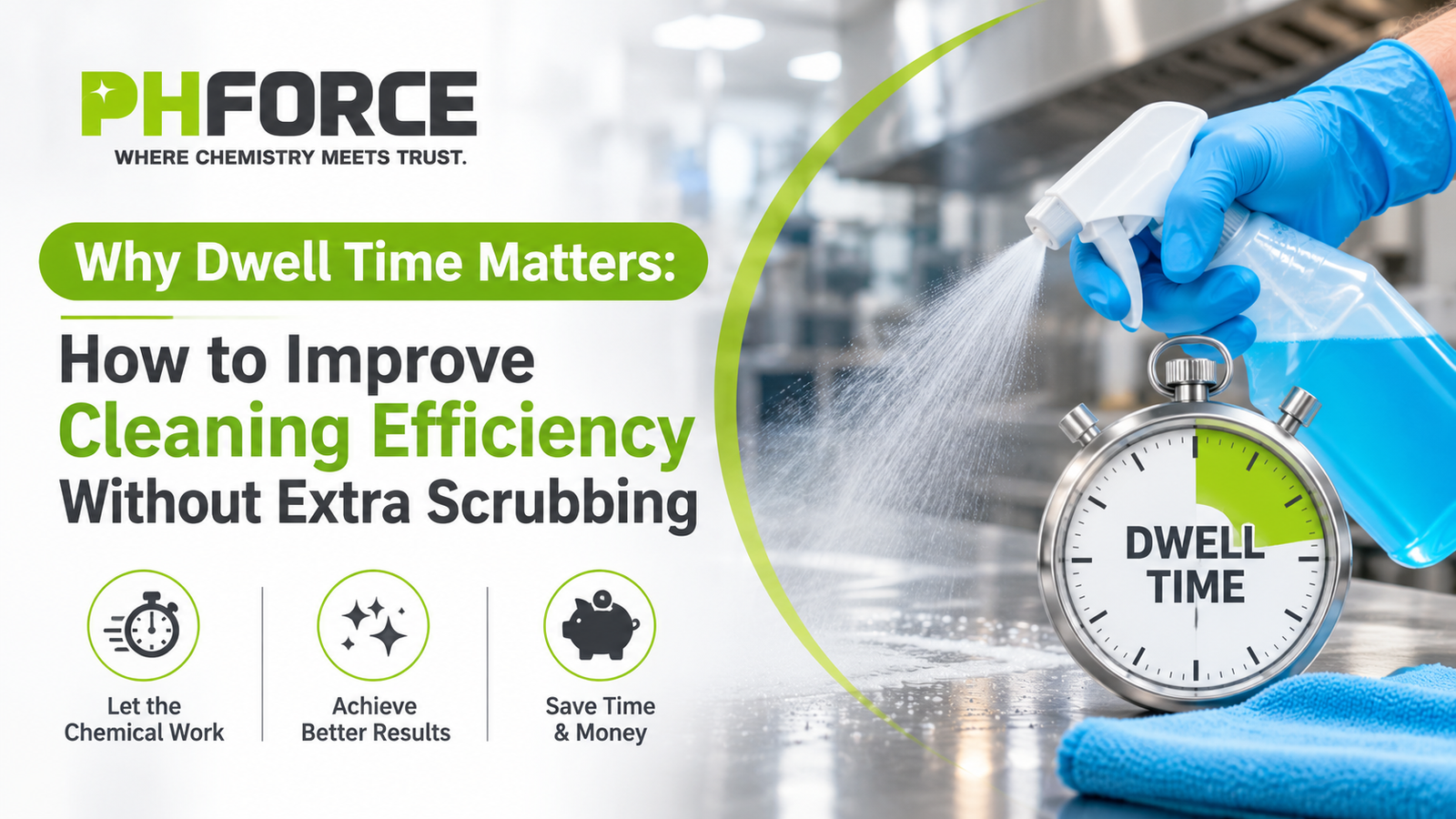
Why Dwell Time Matters: How to Improve Cleaning Efficiency Without Extra Scrubbing
 Most people think a clean surface comes from hard scrubbing. It usually doesn’t. The real work is done by chemicals and it needs time to do it. That wait is called dwell time. When you spray a product and wipe it off straight away, you waste both the product and your effort. Understanding cleaning chemical dwell time can cut your scrubbing, save money and give better results. Any good range of cleaning chemicals Melbourne suppliers sell will list a contact time on the label. This guide explains what dwell time is, why it matters and how to use it.
What is Dwell Time?
Dwell time is how long a cleaning product stays wet on a surface before you wipe, rinse or scrub it off. Some people call it contact time. While the product sits there, it is busy. It loosens grease, breaks down dirt, or kills germs.
Think about a greasy pan. Pour on detergent and rinse it straight away and the grease stays put. Let it soak for ten minutes and most of it slides off. Dwell time is the same idea, applied to benchtops, floors, grills and bathrooms.
Cleaning chemical dwell time is not the same for every product. A glass cleaner may need a few seconds. A heavy degreaser or a disinfectant can need several minutes. The label will tell you.
Why Wiping Too Soon Doesn’t Work
Cleaning products work through chemical reactions and reactions take time. Alkaline cleaners need time to break down fats and oils. Acid cleaners need time to dissolve scale and mineral build-up. Disinfectants must stay wet long enough to kill germs. If they dry out or get wiped early, many germs survive.
When the chemical hasn’t had its time, people make up for it with muscle. They scrub harder and longer. That is tiring and it can scratch stainless steel, tiles and benchtops. It also eats up labour hours. In a busy kitchen, warehouse or office, those hours add up fast.
How Dwell Time Cuts the Scrubbing
When the product gets its full time, the dirt is already loose by the time you pick up a cloth. A light wipe is often enough. Scrubbing becomes a quick finish instead of the main job.
Picture a café cleaning its grill at the end of the day. Spray the degreaser first, then clean the bench and mop the floor, then come back to the grill. The product has done most of the work while you were busy elsewhere. Clean the same grill straight after spraying and you’ll need a lot more elbow grease.
Good cleaning chemical dwell time also saves product. Using extra chemical doesn’t make it work faster. It just costs more and leaves residue that you then have to rinse off.
What Changes How Long a Product Needs
Dwell time isn’t fixed. A few things push it up or down:
- Type of dirt. Fresh spills need less time than baked-on grease or old scale.
- Temperature. Cold surfaces slow the reaction down. Warm water can help.
- Dilution. Follow the label. Too weak and the product needs longer. Too strong and it won’t work any better and it may damage the surface.
- Surface type. Porous surfaces like concrete soak up liquid. Smooth surfaces hold a wet film for longer.
- Weather. On a hot, windy Melbourne day, product can dry on outdoor surfaces within minutes. Dry product stops working.
This last point matters if you buy cleaning chemicals Melbourne sites use outdoors, such as for pavers, bins or loading docks. In summer, work in smaller sections so the product stays wet.
How to Get the Timing Right
You don’t need a special process. Follow these steps:
- Read the label and note the contact time.
- Apply the product evenly, so no spots are missed.
- Keep the surface wet for the full time. Reapply if it starts to dry.
- Set a phone timer. Guessing usually means wiping too early.
- Wipe or rinse, using light pressure.
- For heavy build-up, repeat the process instead of scrubbing harder.
Train your team on this too. If one person waits and another wipes straight away, you’ll get uneven results and you won’t know why.
Choosing the Right Product
Dwell time also depends on picking the right chemical in the first place. A degreaser won’t help with scale and a general cleaner won’t replace a disinfectant. Check the product’s data sheet, match it to the type of dirt and confirm the dilution rate before you start.
If you’re not sure what suits your site, talk to the Leardon Chemicals team. We can help you choose cleaning chemicals Melbourne businesses can use with confidence and explain the right contact time for each one.
Conclusion
Scrubbing harder is rarely the answer. Let the product work and the job gets easier. Respect cleaning chemical dwell time and you’ll use less effort, less product and less time to get a cleaner result. Next time you spray, set the timer and walk away for a few minutes. The chemical will do the heavy lifting.